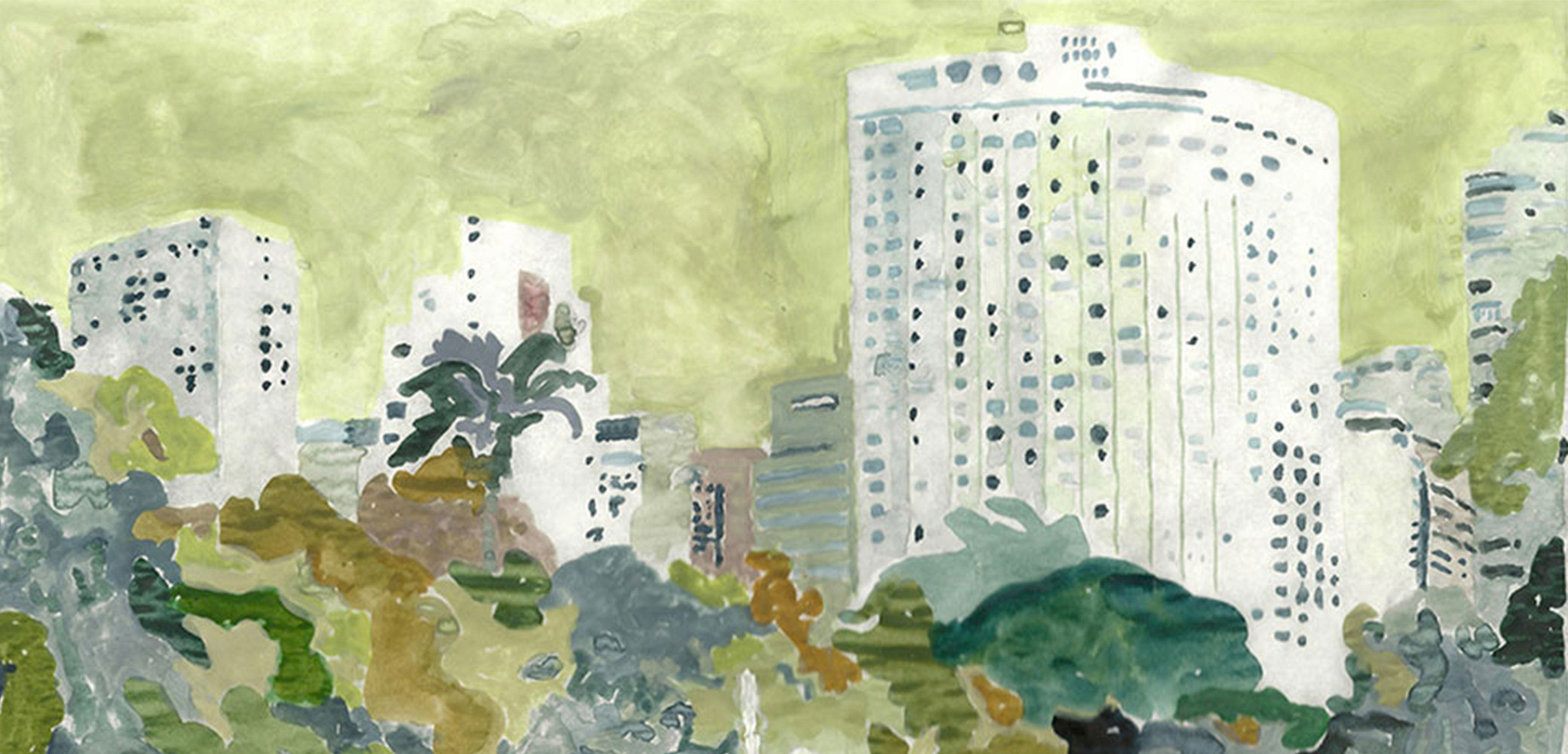


BH Business Center
Belo Horizonte, MG - Brazil 2014We face a recurring situation in cities: fissures that subdivide the urban fabric, producing large gaps between regions. The area defined by this competition — the passage from Praça da Rodoviária to Lagoinha Station and from there to Praça do Peixe — proves that Belo Horizonte is a fractured city. The current urban structure offers no solutions to the city’s problems. With all the possible ways to confront this issue, one reality emerges: we can reconnect this city. Belo Horizonte needs to be treated and seen as a whole. We believe in a city capable of reclaiming public space for pedestrians. However, the question remains: how can we do this, and what does it mean? Leaving aside the complexity of this task, we must first address one of the most basic human needs: the need to inhabit space. As architects, we must design spaces that embrace all forms of human behavior—spaces that have individuality but are also capable of absorbing diversity and chaos. For this reason, our proposal respects what already functions while increasing the adaptability of the spaces. It is a proposal that responds to present issues but keeps in mind the possibility of transformation in the future.
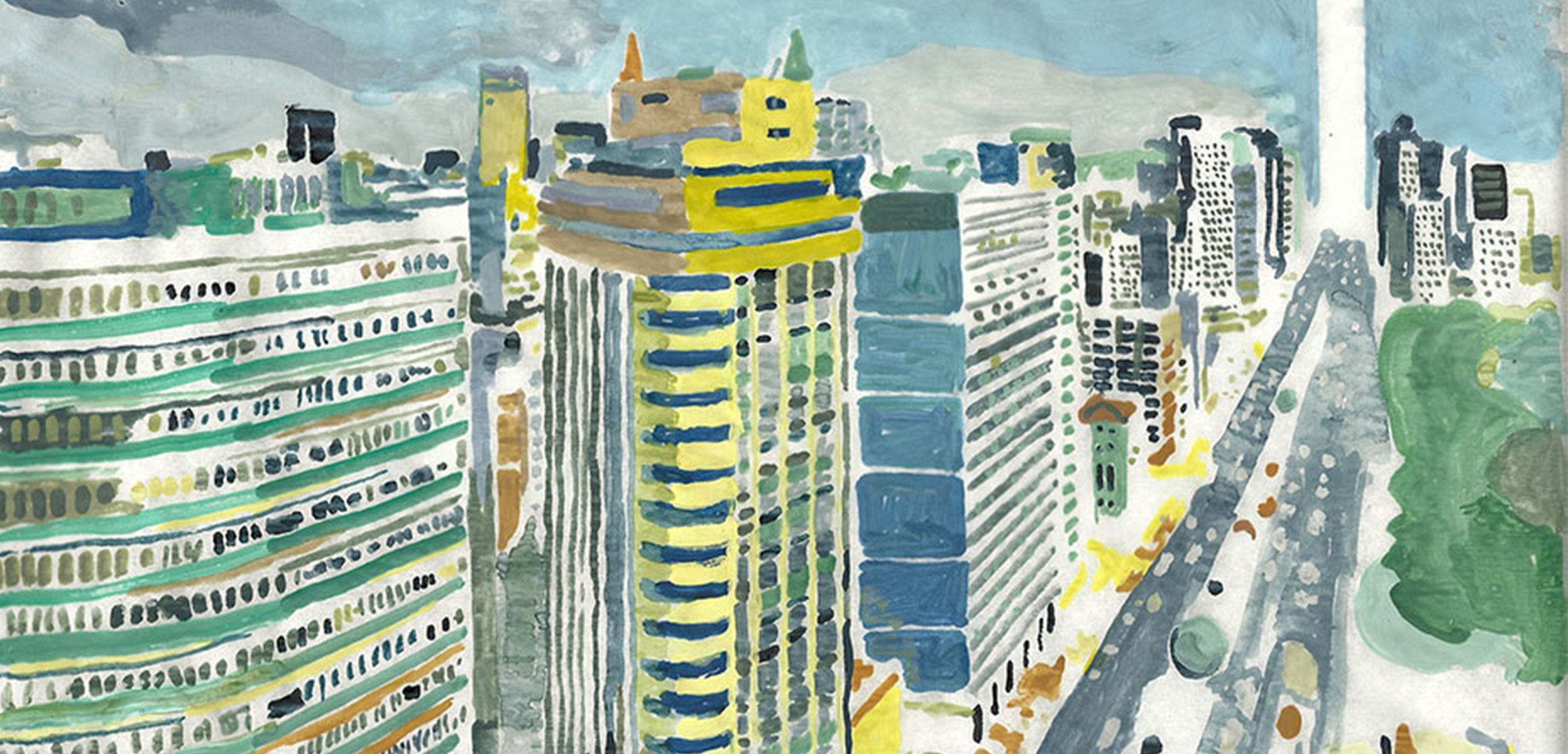

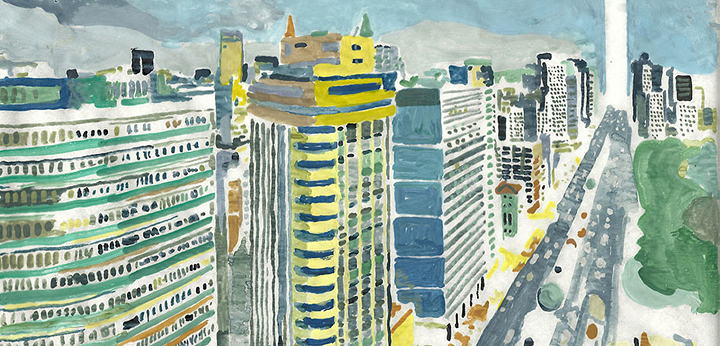
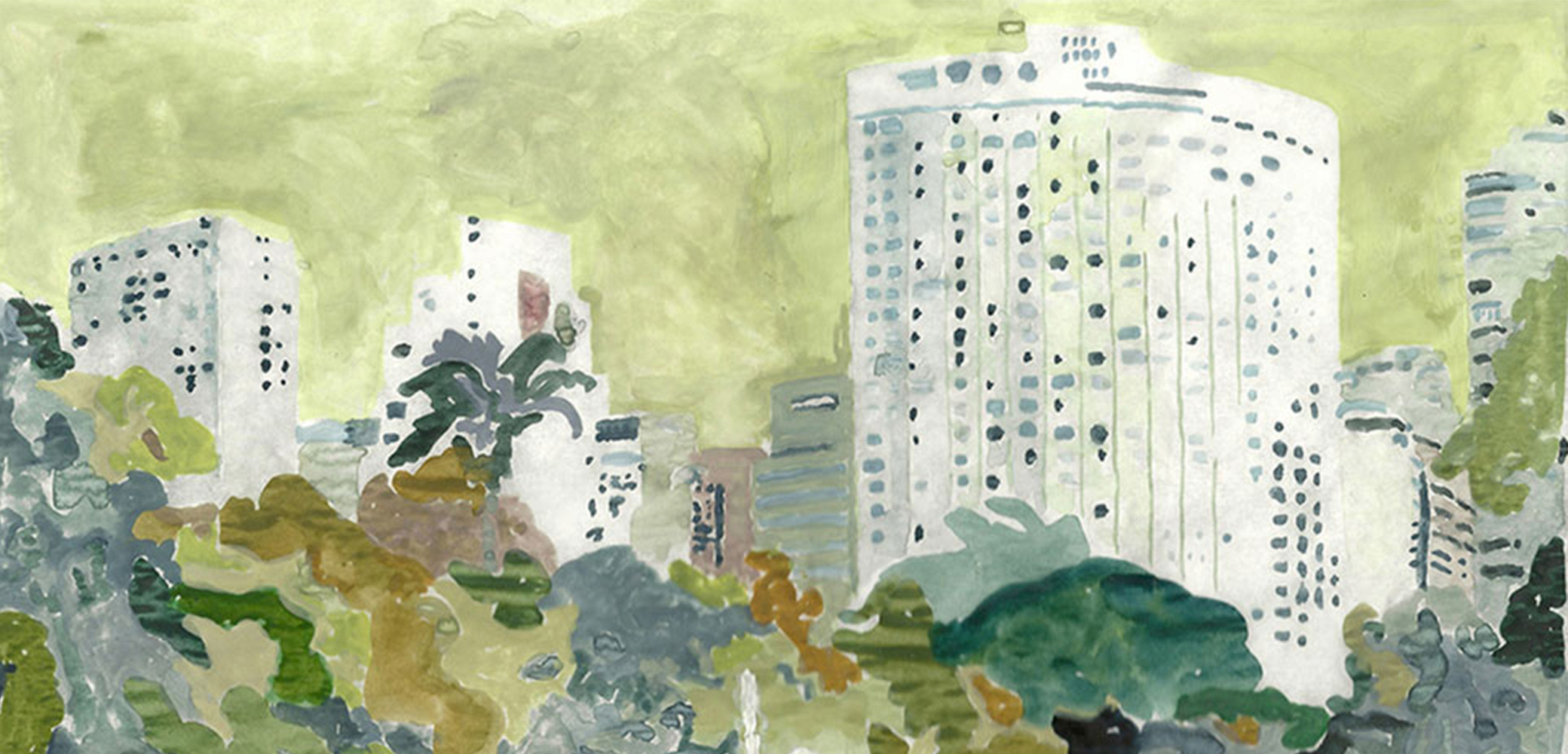


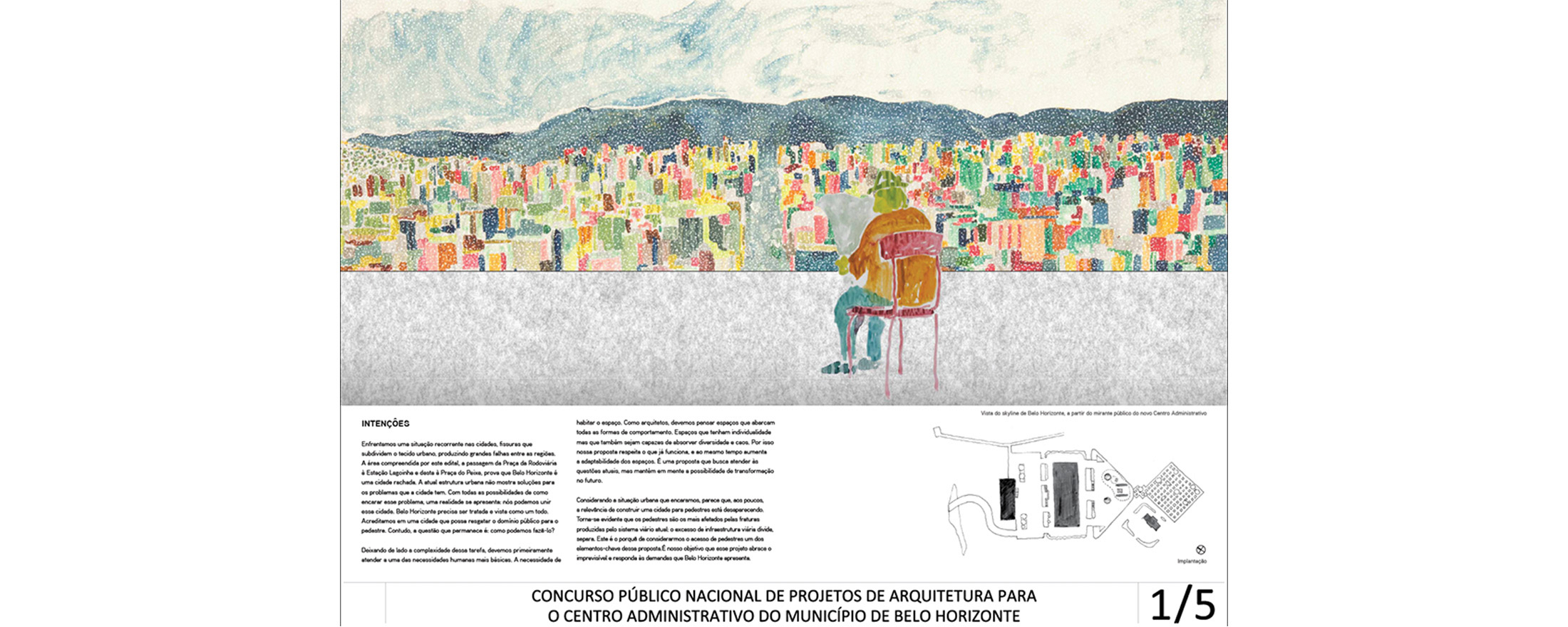




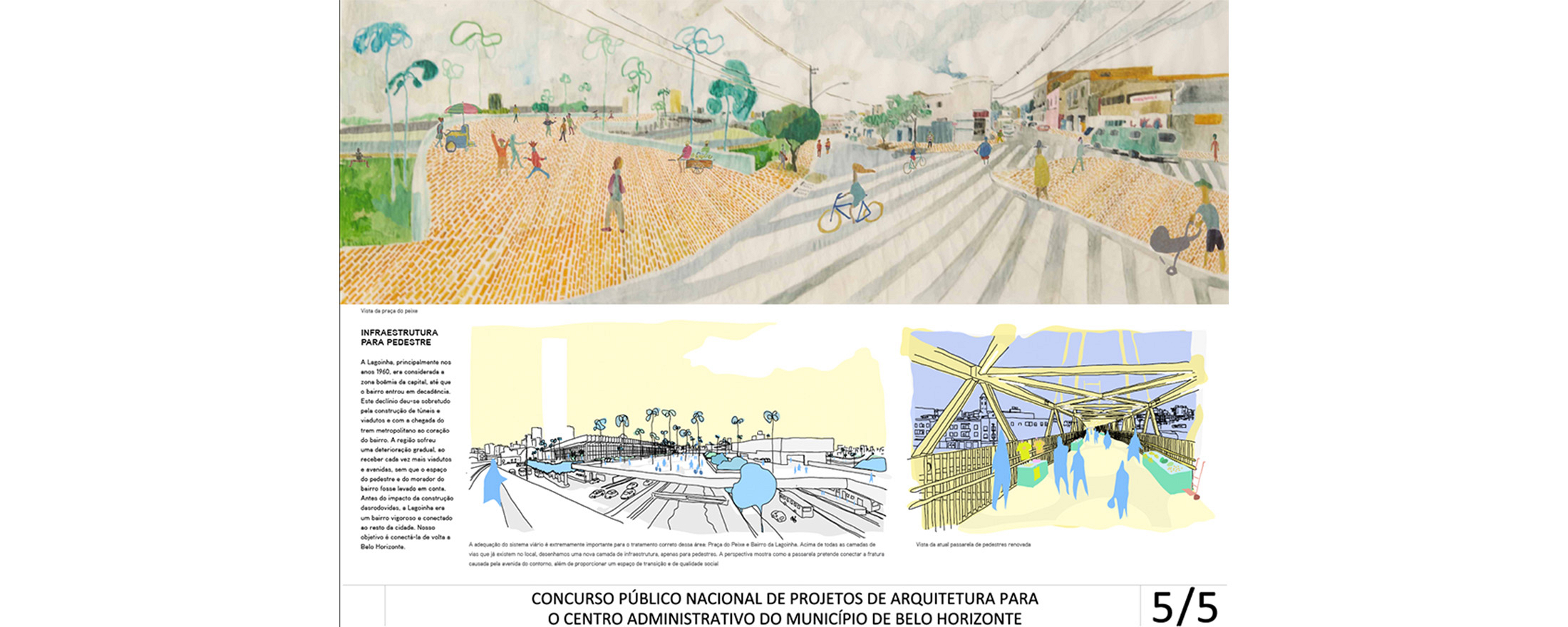

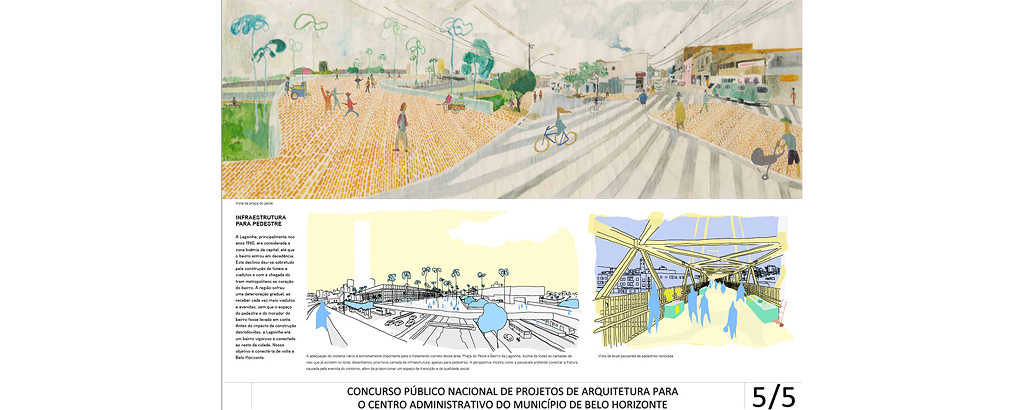
Given the urban situation we face, it seems that the relevance of designing a pedestrian-oriented city is gradually disappearing. It becomes evident that pedestrians are the most affected by the fractures produced by the current road system: an excess of vehicular infrastructure divides and separates. This is why we consider pedestrian access one of the key elements of this proposal.
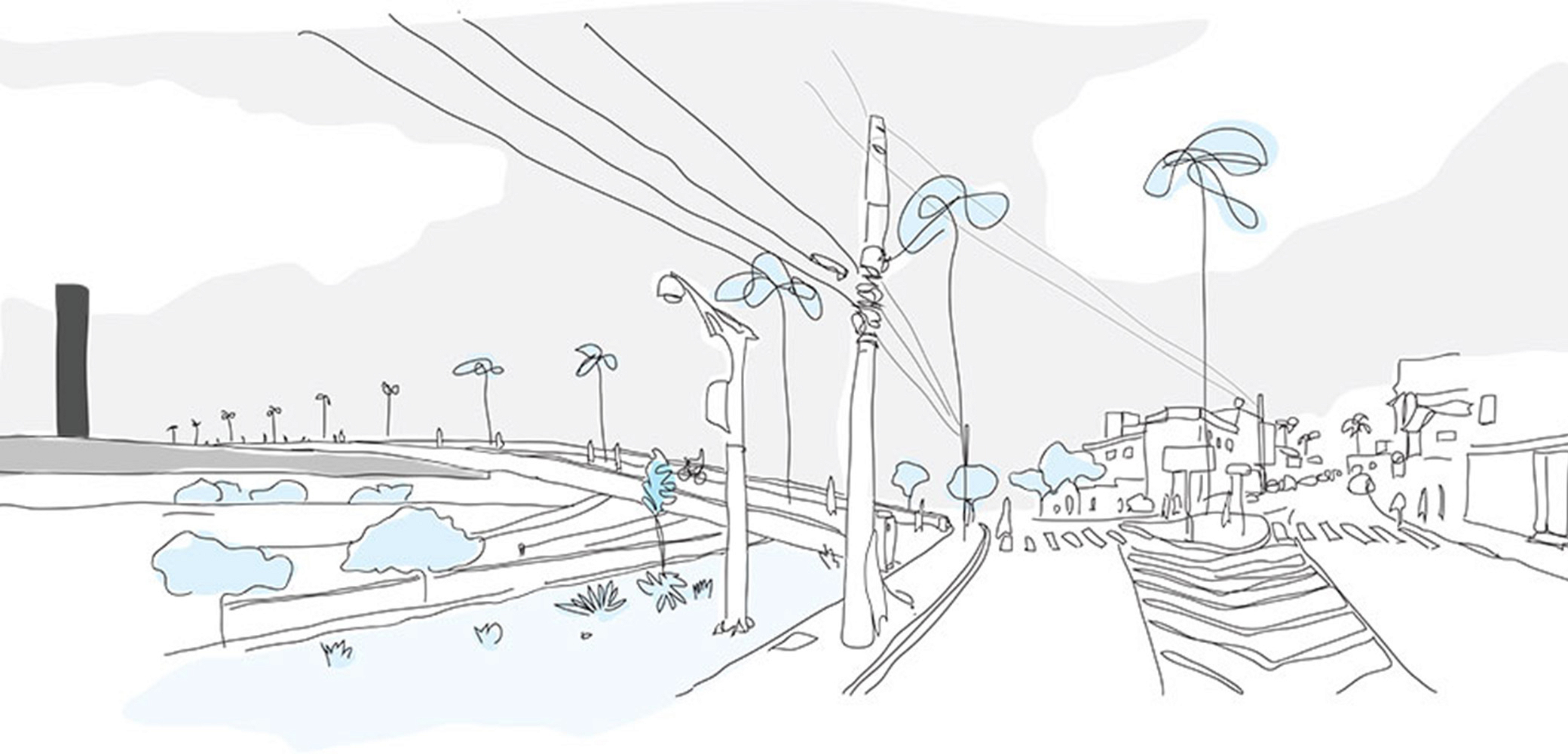
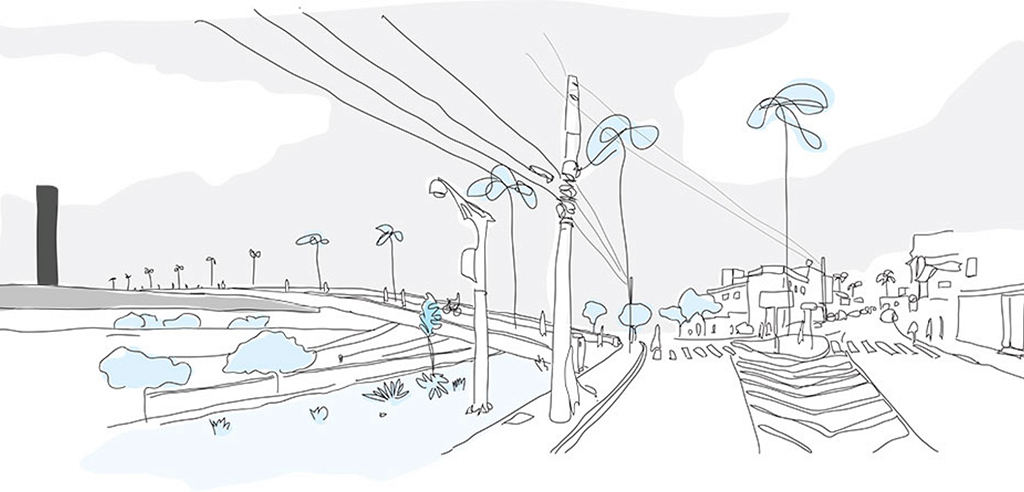
Lagoinha, especially in the 1960s, was regarded as the bohemian zone of the capital, until the neighborhood fell into decline. This decline occurred largely due to the construction of tunnels and overpasses, as well as the arrival of the metropolitan train in the heart of the district. The area suffered gradual deterioration as more overpasses and avenues were built, without consideration for the pedestrian or the neighborhood’s residents. Before the impact of road construction, Lagoinha was a vibrant neighborhood connected to the rest of the city. Our goal is to reconnect it to Belo Horizonte.
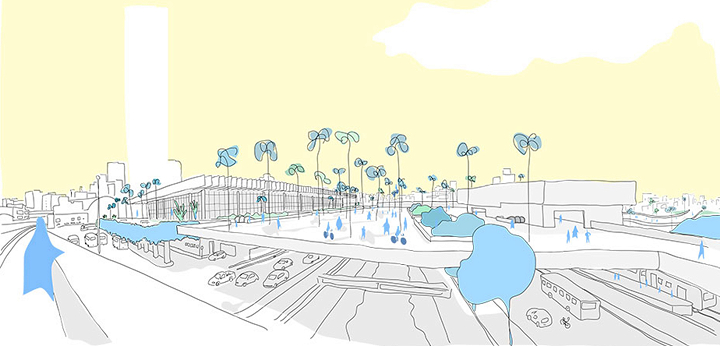
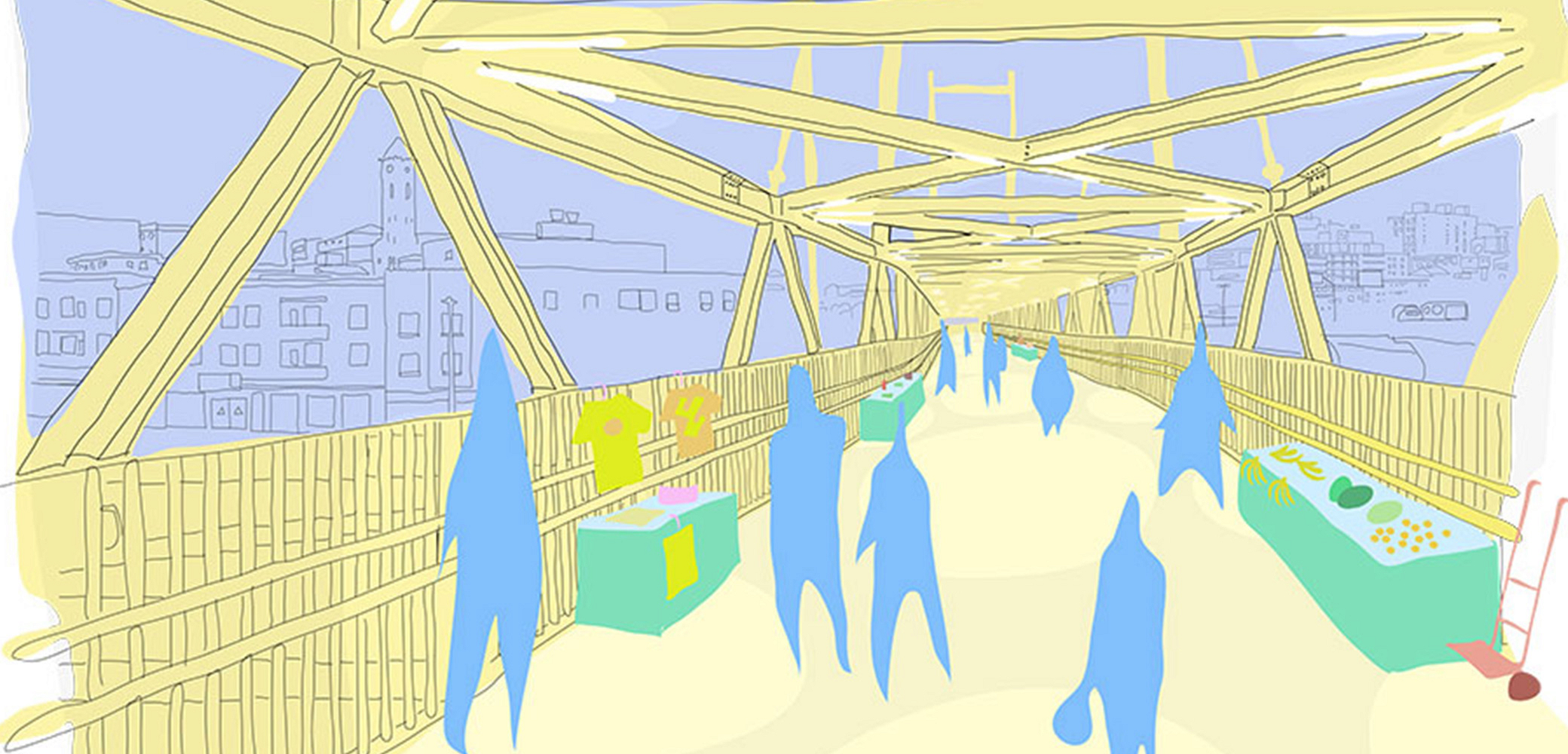
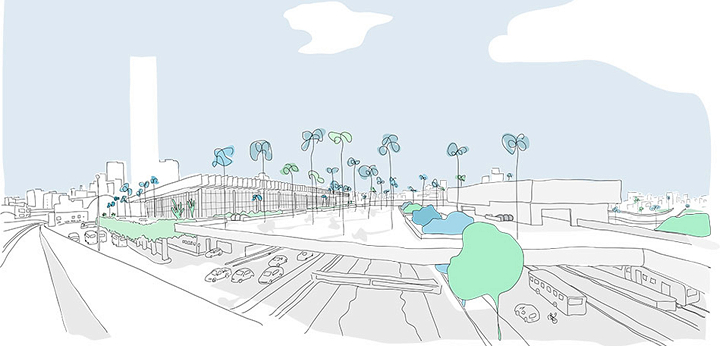
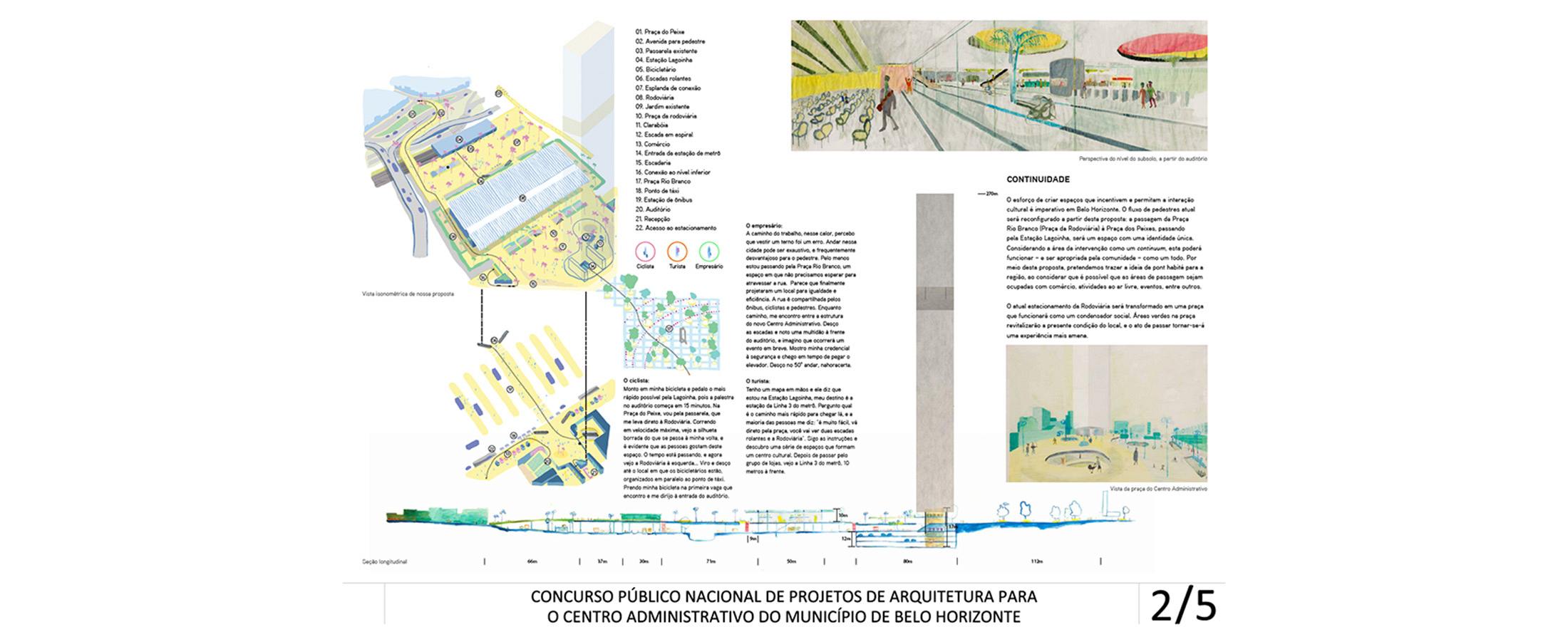
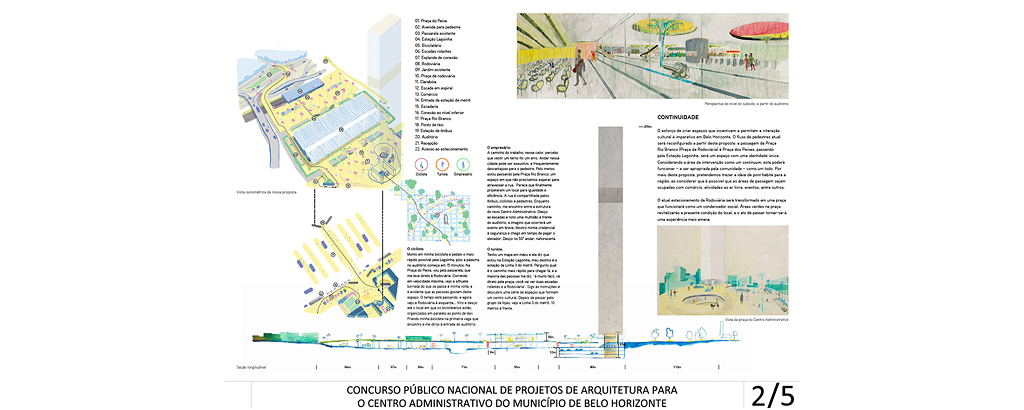
The effort to create spaces that encourage and enable cultural interaction is essential in Belo Horizonte. The current pedestrian flow will be reconfigured through this proposal: the passage from Praça Rio Branco (Praça da Rodoviária) to Praça dos Peixes, passing through Lagoinha Station, will become a space with a unique identity. By considering the intervention area as a continuum, it can function — and be appropriated by the community — as a whole. Through this proposal, we aim to bring the concept of pont habité to the region, imagining that passageways can be occupied with commercial uses, outdoor activities, events, and more.
Beyond the urban characteristics that need attention, this intervention area holds a key potential that works in our favor: it is a lively and restless area. A palette of interactions takes place there every day. Our understanding of the current occupation of this space brings multiple layers of information to the table. However, the existing challenge lies in the fact that these interactions occur in a very informal manner. Following this line of thought, our design aligns with the idea of non-invasive architecture—one that structures and formalizes this existing interaction. Through small interventions, such as lighting the pedestrian walkway, we enable the coexistence of activities that already take place there, including the informal commerce that exists today. We are exploring the possibility of reinforcing the appropriation of space, making it safer and more usable.
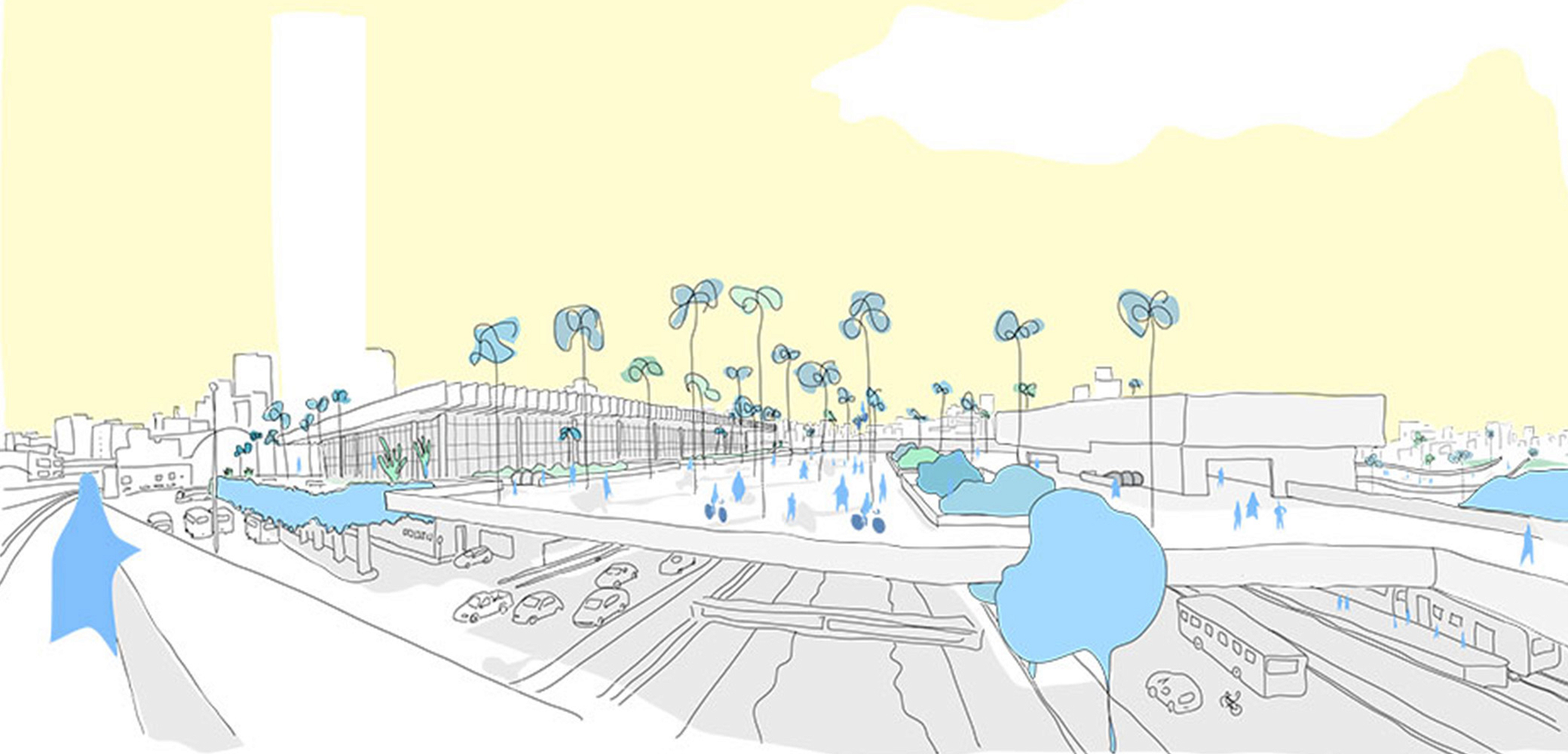
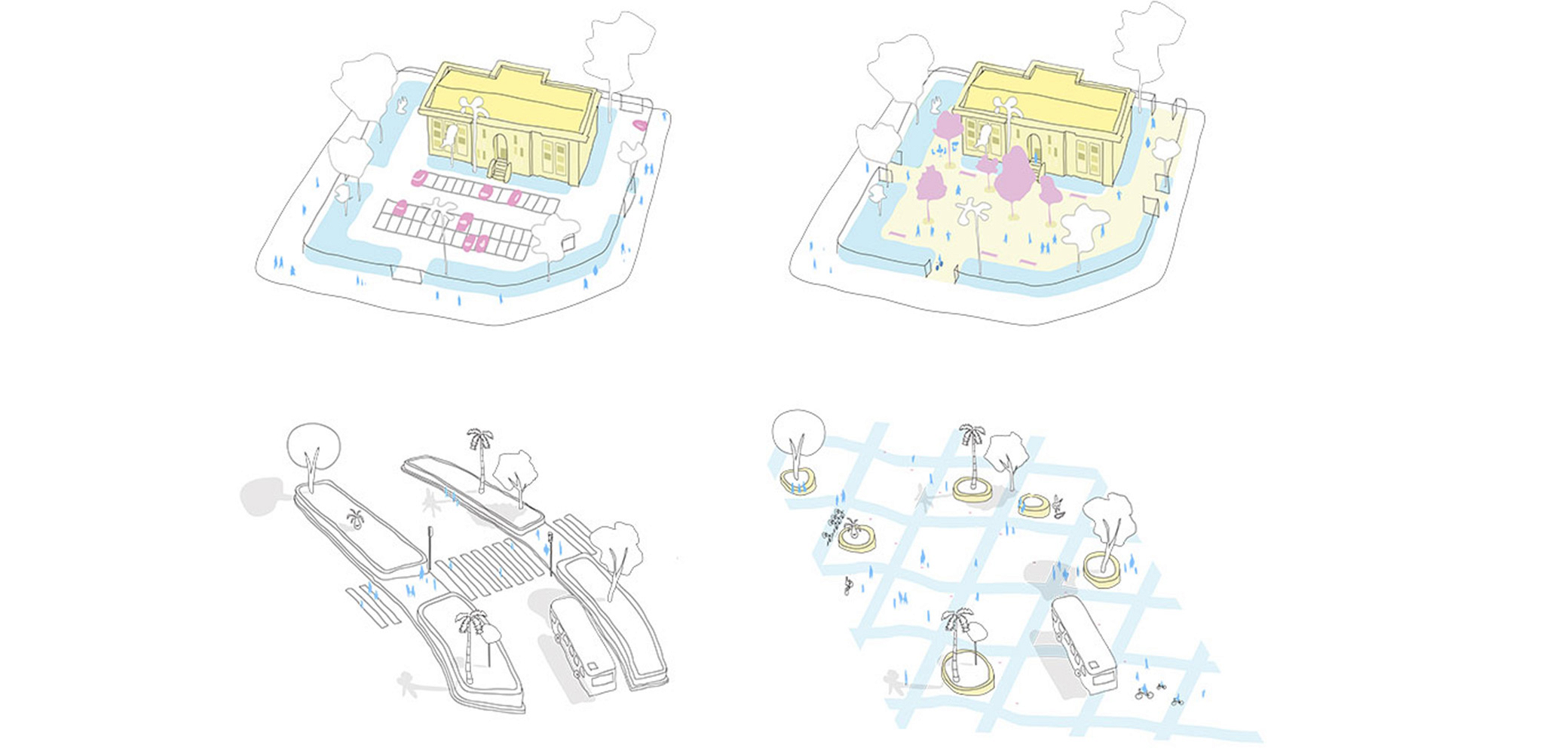
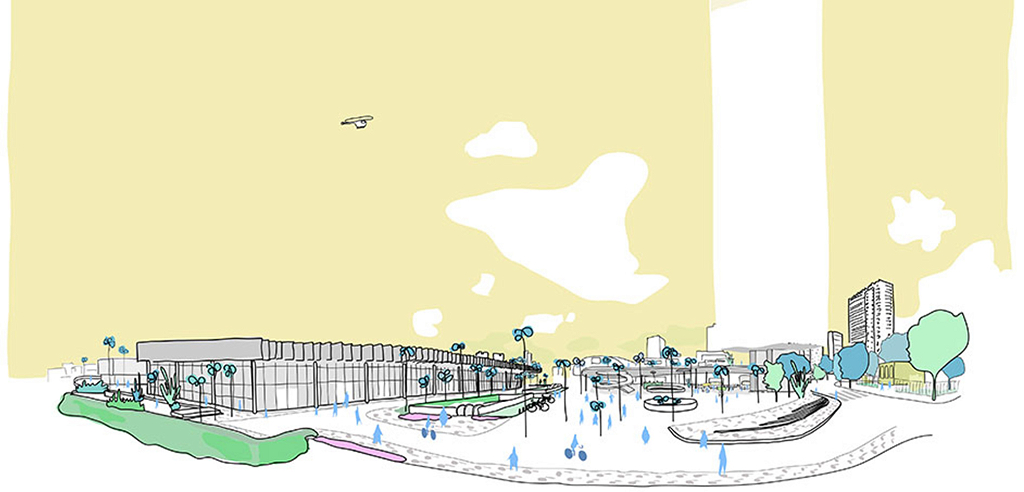
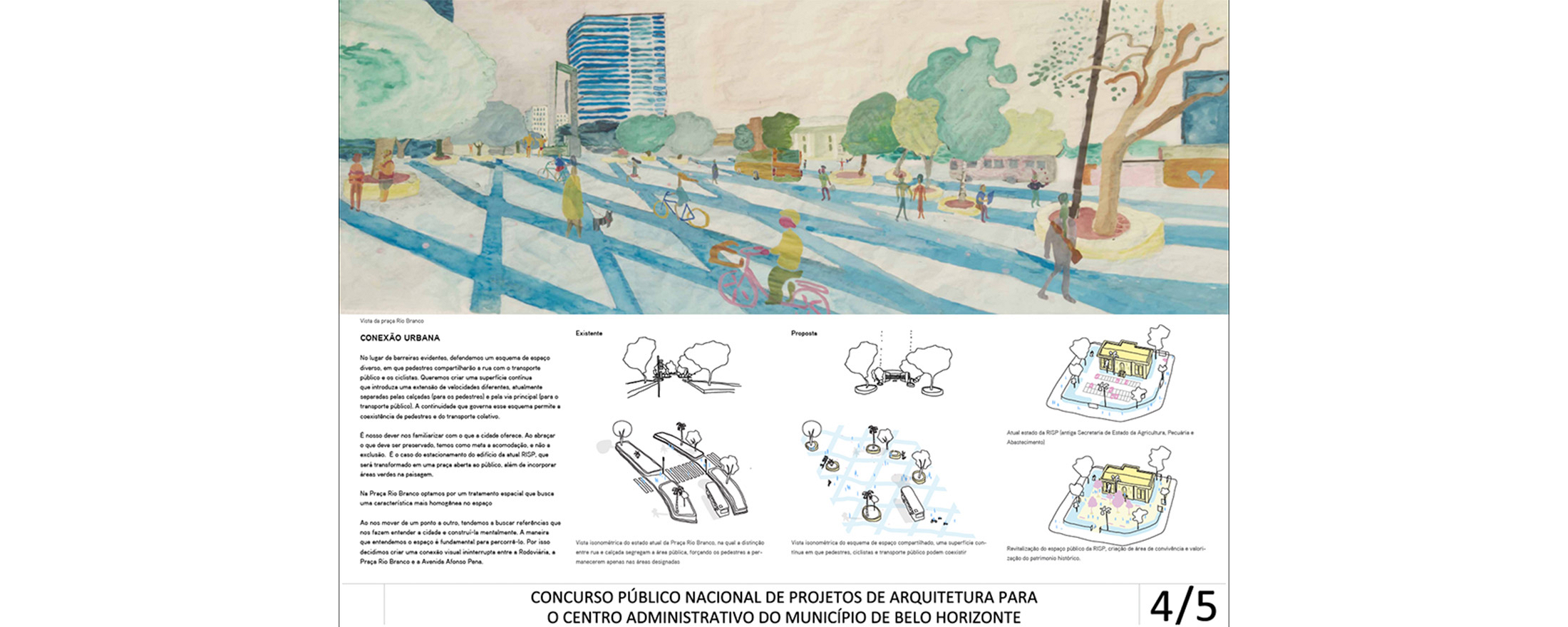
It is our duty to become familiar with what the city offers. By embracing what must be preserved, our goal is accommodation rather than exclusion. This applies, for example, to the parking lot of the current RISP building, which will be transformed into a public plaza and will incorporate green areas into the landscape.
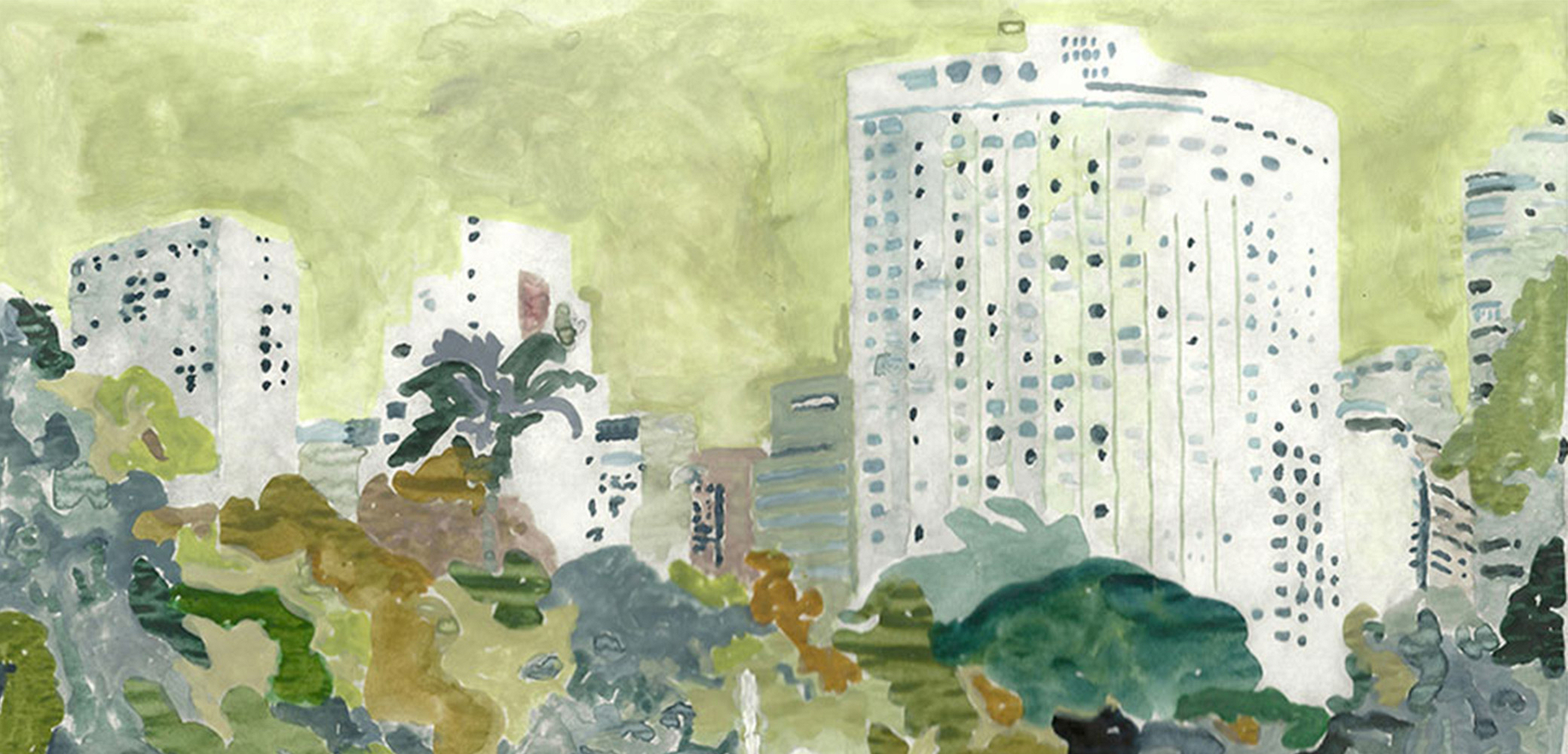
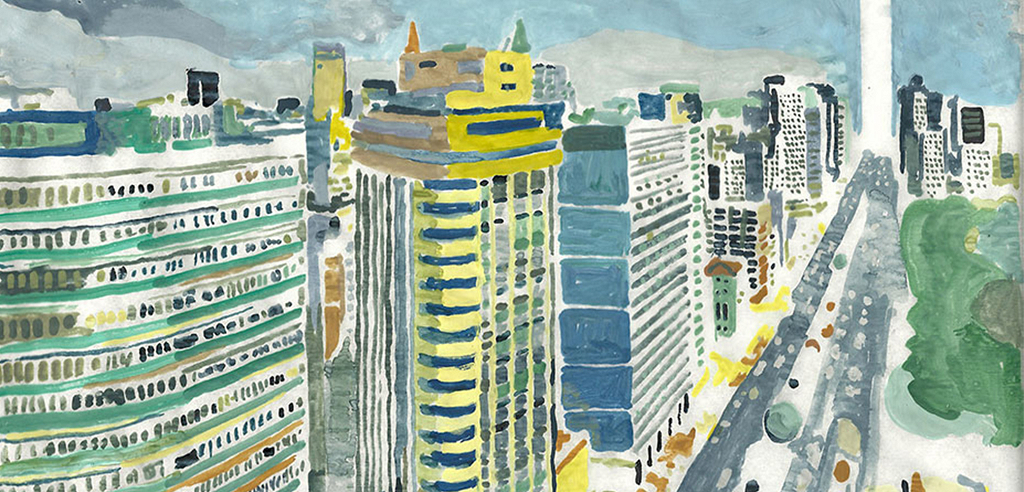
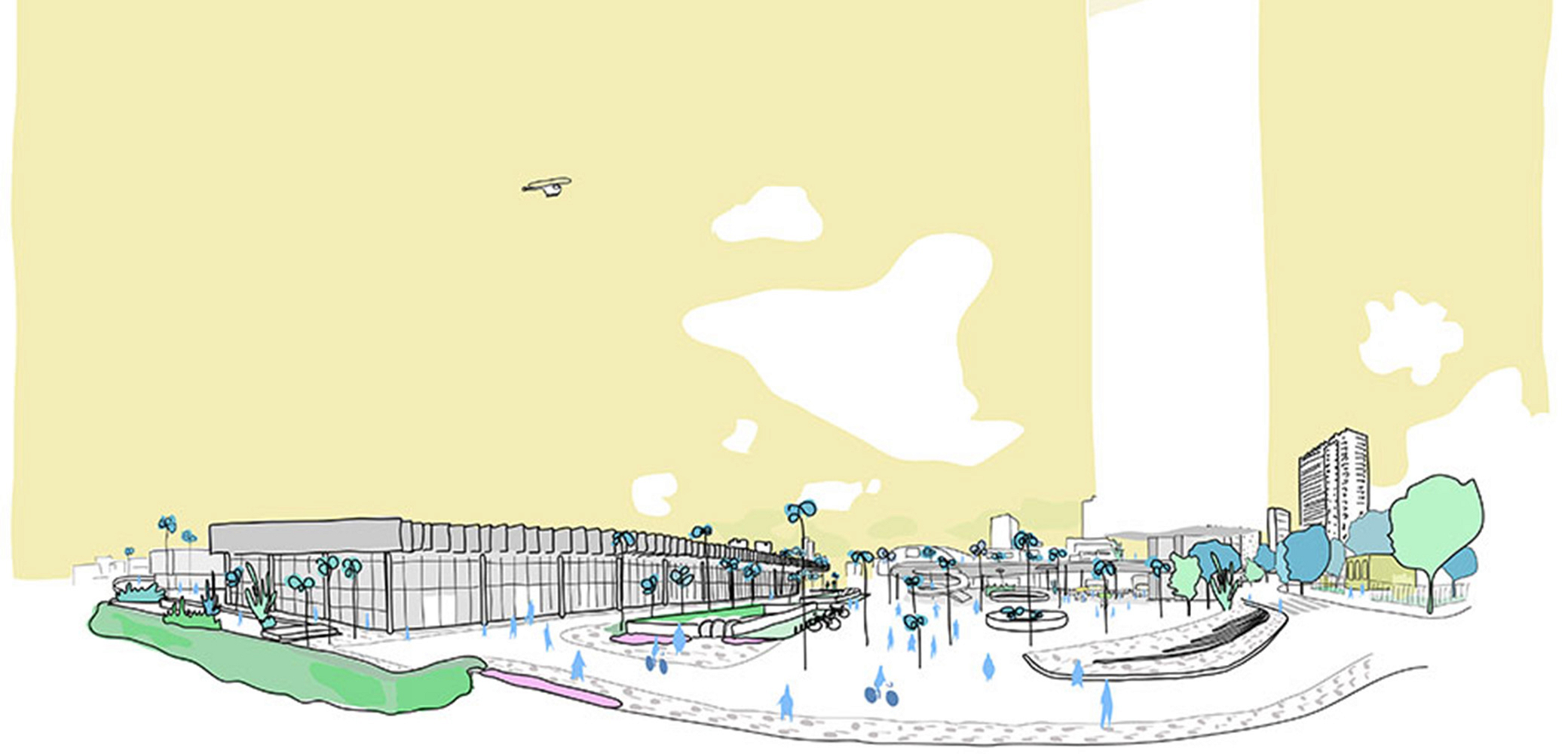
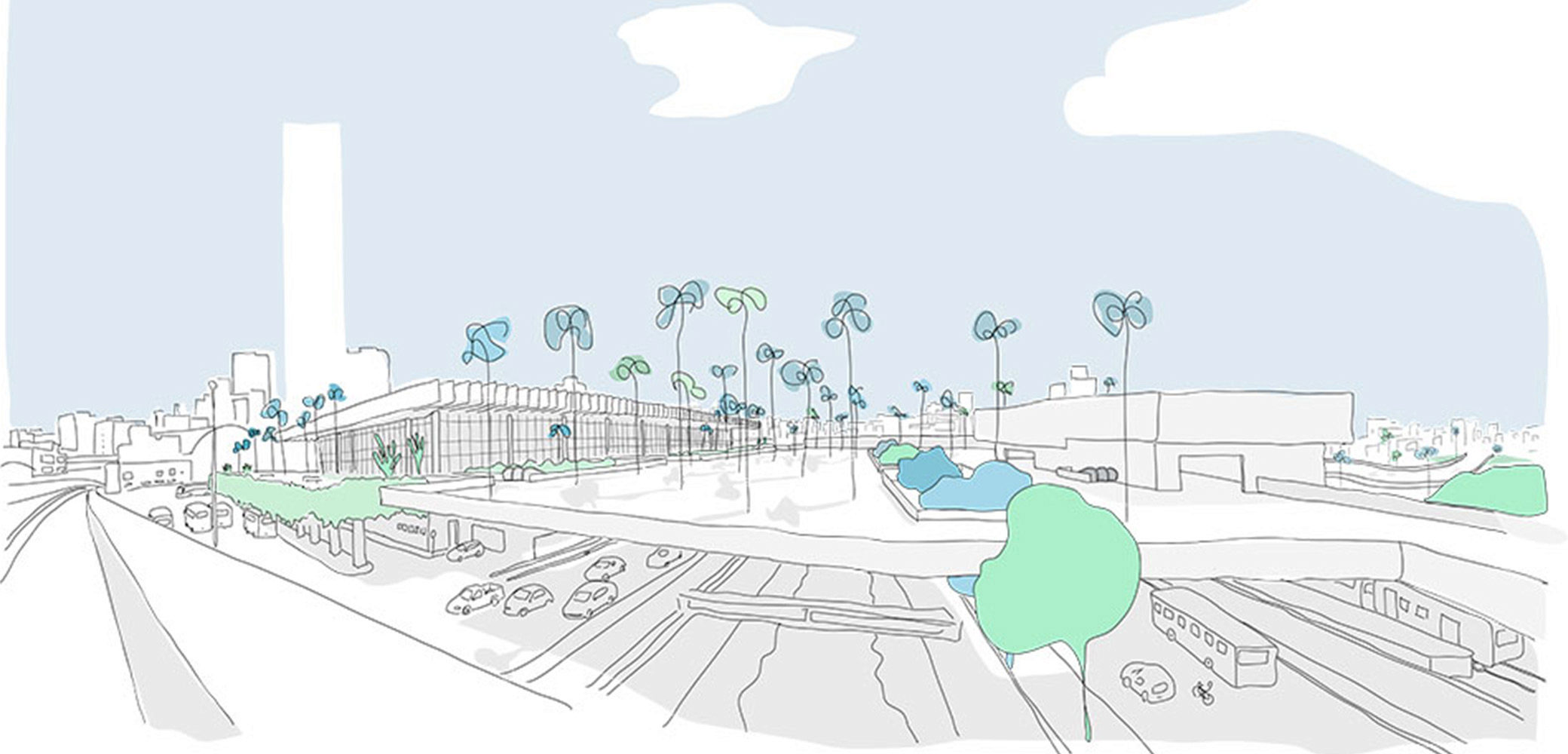
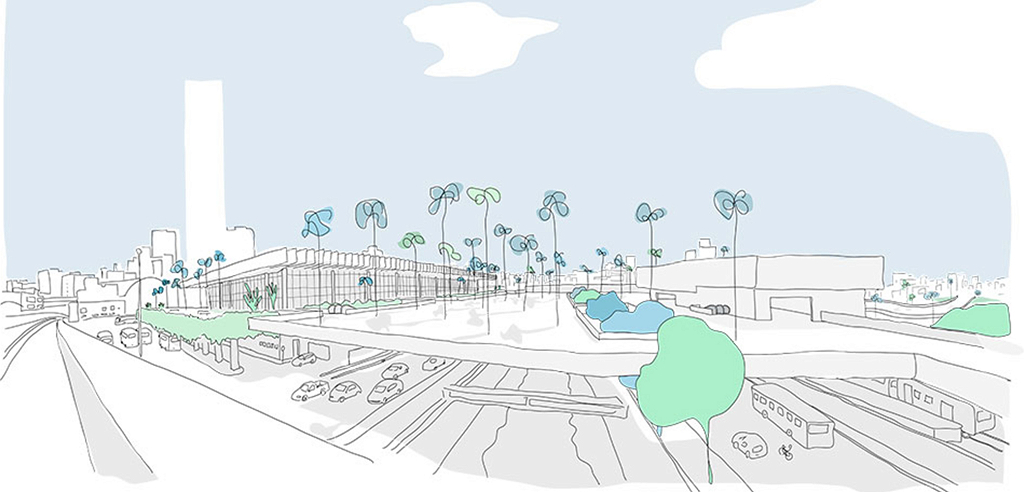
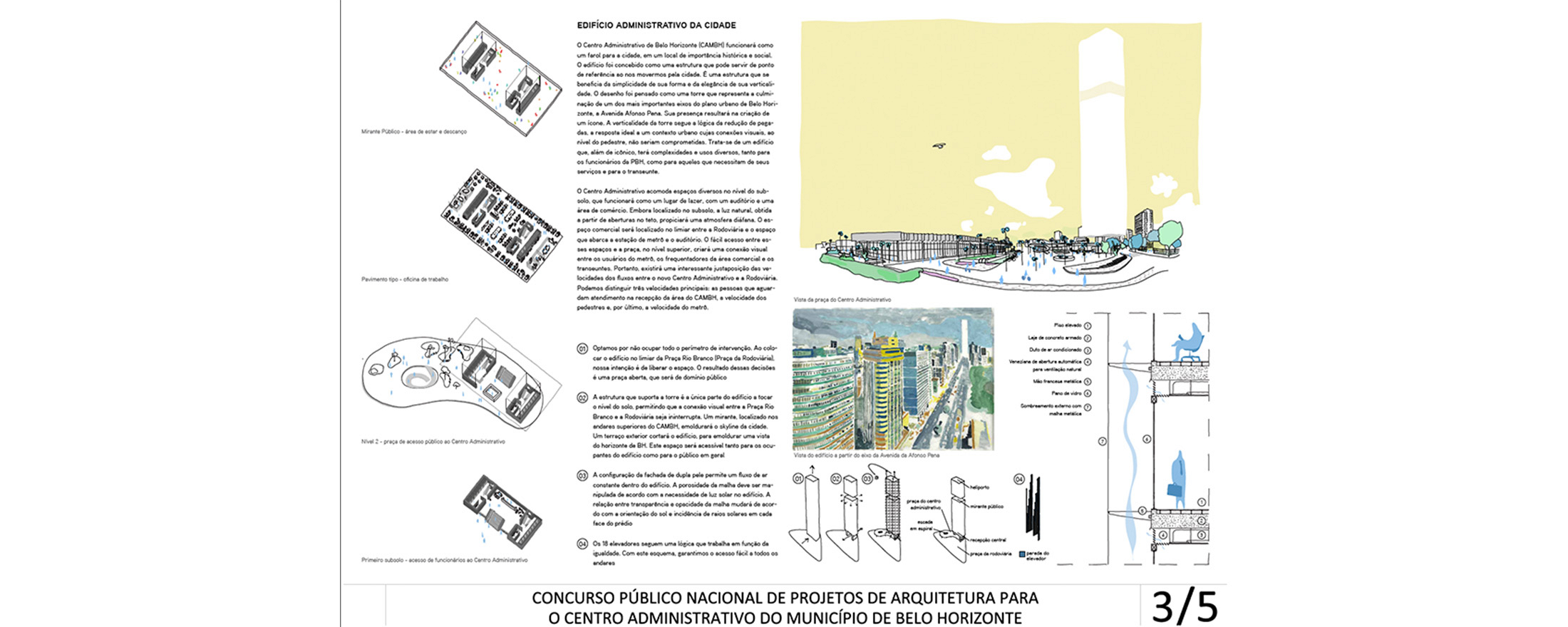
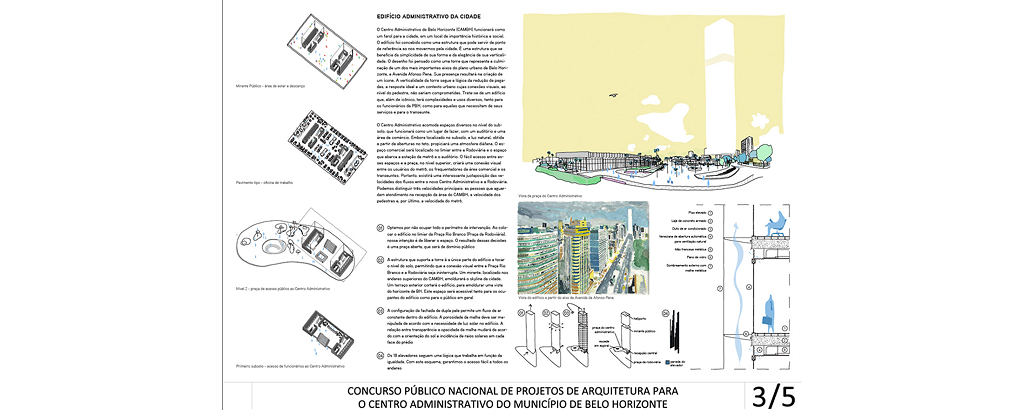
The Belo Horizonte Administrative Center (CAMBH) will serve as a beacon for the city, in a place of historical and social importance. The building was conceived as a structure that can act as a reference point as one moves through the city. It benefits from the simplicity of its form and the elegance of its verticality. The design was conceived as a tower that represents the culmination of one of the most important axes of Belo Horizonte’s urban plan: Avenida Afonso Pena. Its presence will create an architectural landmark. The tower’s verticality follows the logic of minimizing building footprint, an ideal response to an urban context where visual connections at pedestrian level must not be compromised. It is a building that, beyond being iconic, will accommodate complex and diverse uses, serving both city employees and those who require its services, as well as passersby.
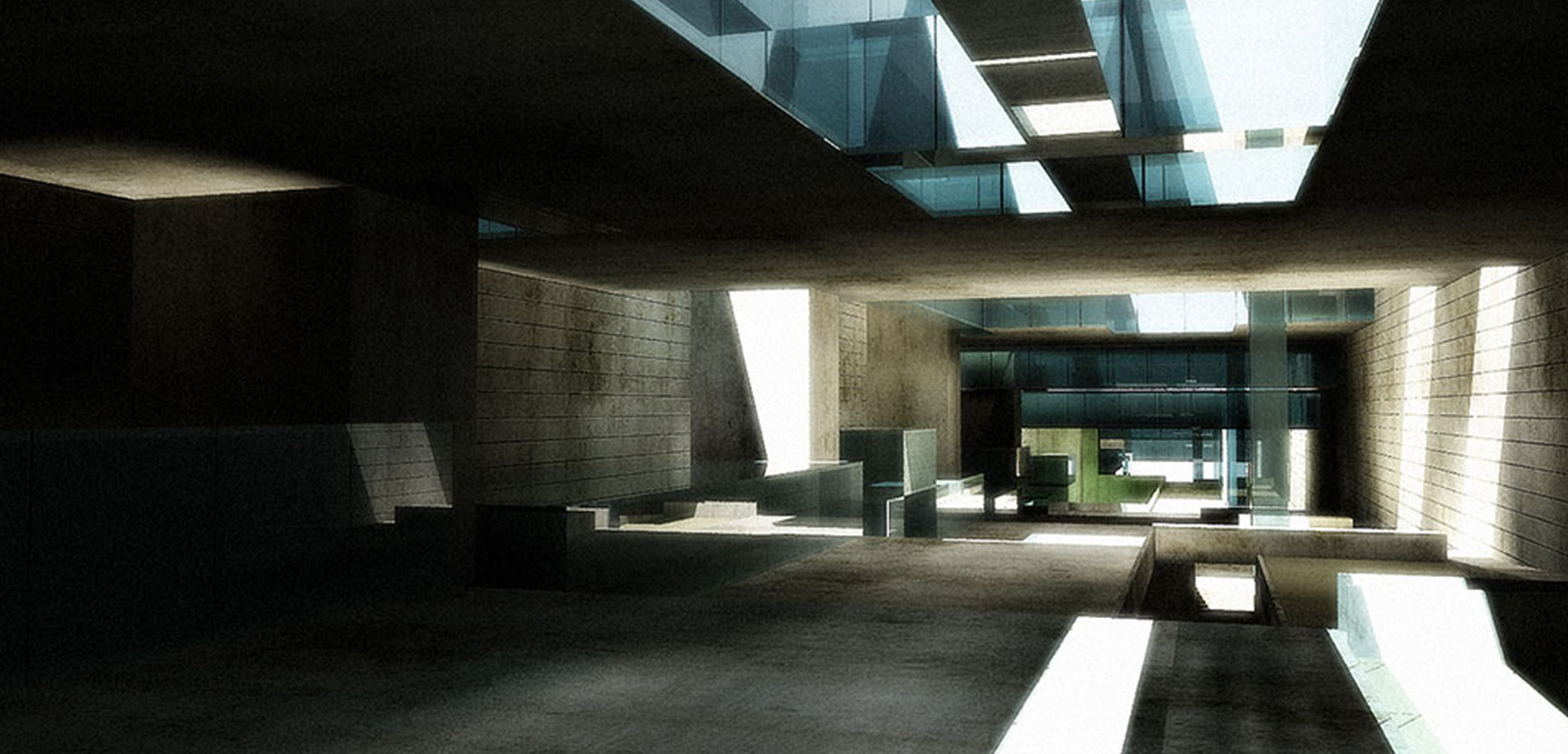
The Administrative Center accommodates diverse spaces at the basement level, which functions as a leisure area with an auditorium and retail spaces. Although located underground, natural light obtained through ceiling openings will create a bright atmosphere. The commercial area will be positioned between the Bus Station and the area encompassing the metro station and the auditorium. The easy access between these spaces and the plaza at the upper level will create a visual connection between metro users, visitors to the commercial area, and passersby. Therefore, an interesting juxtaposition of movement speeds will arise between the new Administrative Center and the Bus Station. We can distinguish three main speeds: people waiting for service at the CAMBH reception area, the pace of pedestrians, and finally, the speed of the metro.
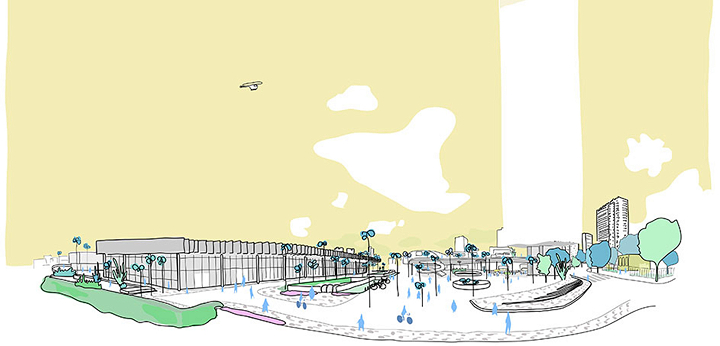
The current Bus Station parking lot will be transformed into a plaza that will function as a social condenser. Green areas in the plaza will revitalize the site, making the act of passing through more pleasant.
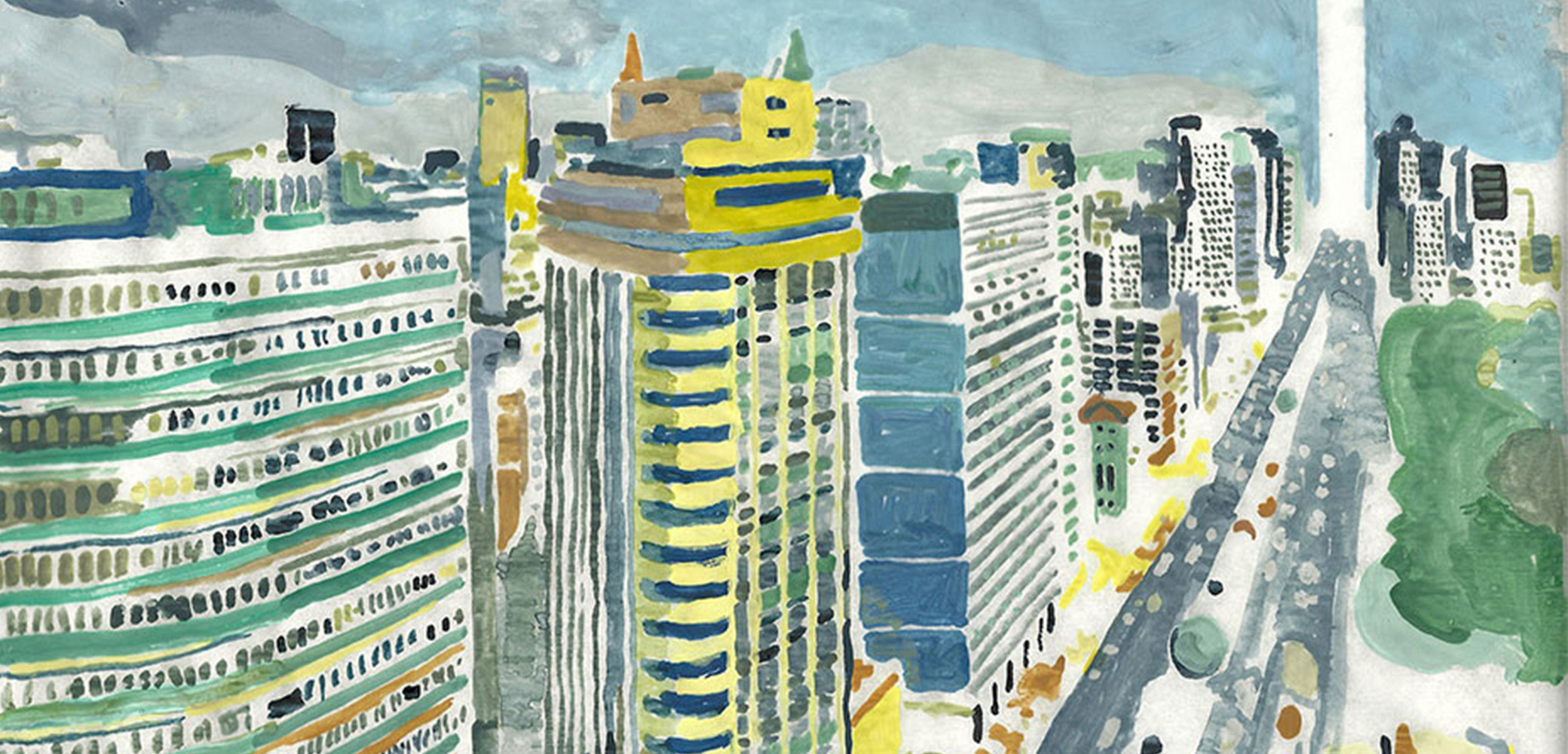
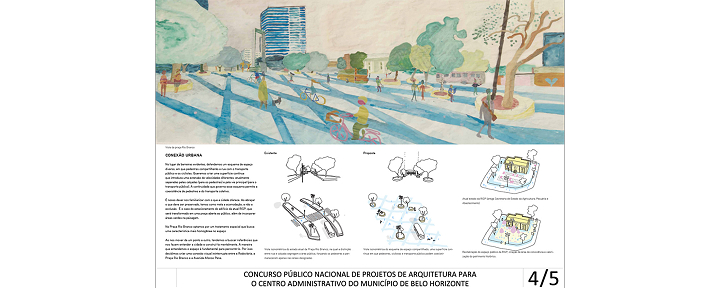
Instead of obvious barriers, we advocate for a diverse spatial scheme in which pedestrians will share the street with public transportation and cyclists. Our aim is to create a continuous surface that introduces a range of movement speeds, currently separated by sidewalks (for pedestrians) and the main roadway (for public transport). The continuity that shapes this scheme allows for the coexistence of pedestrians and collective transport.
Our objective is for this project to embrace the unpredictable and respond to the demands presented by Belo Horizonte, creating an architecture that is symbolically plural.